


Ever get caught without a light meter? Stuck on an important photographic expedition without a way of determining your exposure settings? Well I have and it worked out ok, thanks to the Sunny 16 Rule and careful consideration of years of experience. Here's the story surrounding this event and how it worked out.
High Investment Trip
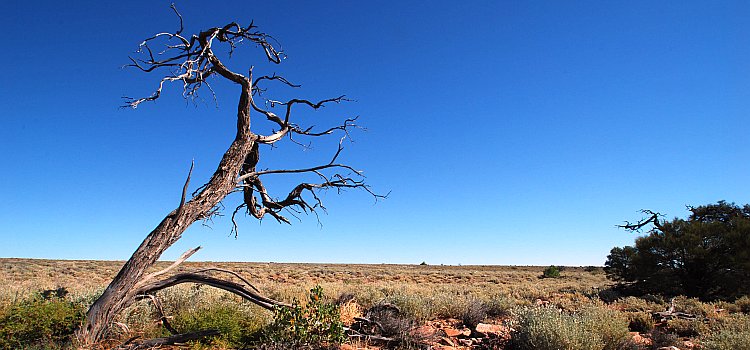
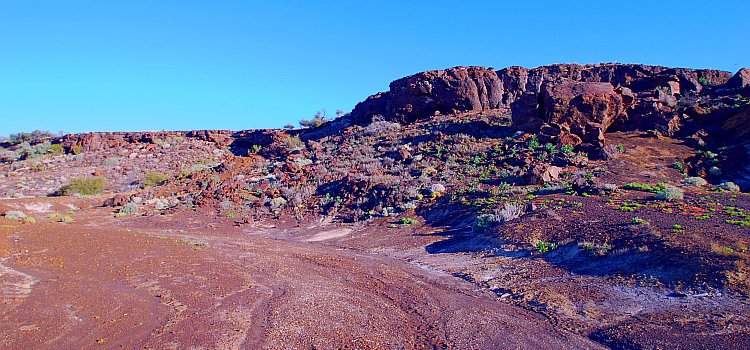
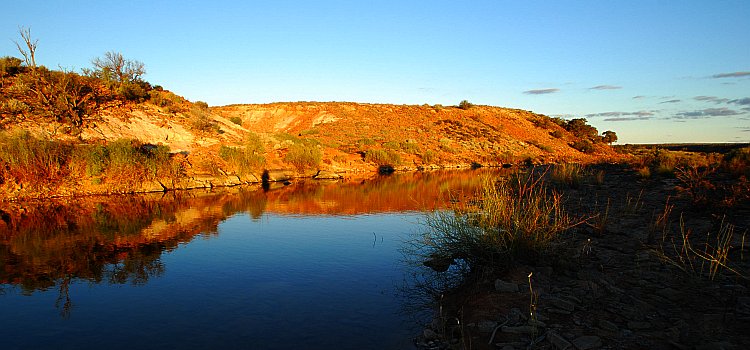
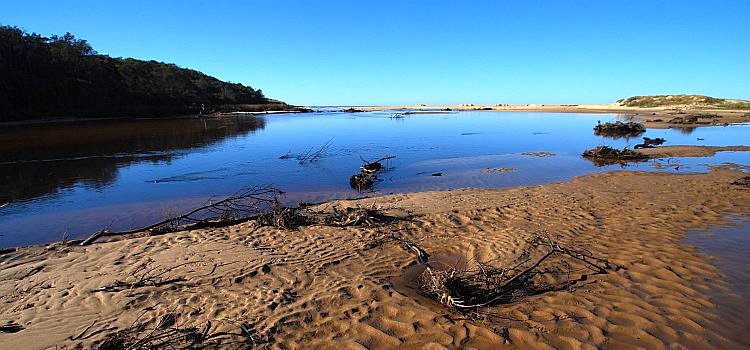
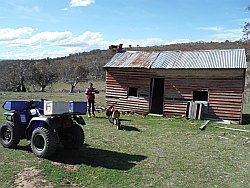
For over 12 months I'd planned and prepared for this wilderness landscape photography trip to outback South Australia. I'd driven about a third of the way across the continent to get to my home base at Roxby Downs, a mining town in the arid desert. I'd driven on pastoral station roads for 82 km to Bosworth Station Homestead where I left the car and trailer. I'd ridden on my ATV (that's a four wheel motorbike) for two hours over the roughest and rockiest ground you could imagine and set up a base camp on Andamooka Island.
Light Meter Lost
I camped the first night and went photographing just on daylight.
At the start of my afternoon photo session my light meter was missing. It must have fallen out of my coat pocket while I was riding. If you could see the million, trillion rocks strewn over the desert and where I'd been on the bike, you'd understand that it just wasn't worth looking for the meter. Five days of photographing in front of me and no way of getting accurate light readings.
Applying the Sunny 16 Rule
The Sunny 16 Rule says that on a sunny day the exposure is the reciprocal of the film speed at f16. That's 1/ISO @ f16 Here's how I applied the rule, making notes and an exposure table in my notebook:
First of all, please understand that there are a number of things in life where too much is better than not enough. Among them are your breakfast, your pay and film exposure. I was using 160 ISO film and the nearest shutter speed was 1/125 so I added 1/3 stop to line up with the available shutter speeds. That gave me 1/125 @ f16.
Next, it was winter so I added another stop. That made it 1/60 @ f16. That was fine for the middle of the day.
Being winter, the angle of the sun was low all day so I was photographing for most of the time except for a while around noon when I went back to my camp for a feed.
The above film exposure wouldn't do for the early and late shots as the light level was decreased. For the first and last half hour of the day I added another two stops making the exposure 1/15 @ f16. Then for the two hours on the noon side of that, I added one stop to the middle of the day reading, making the exposure 1/30 @ f16 for that time period.
Of course, when I used the polarising filter I added another two stops. When using 400 ISO black and white film I made a new set of figures adding three stops for the red filter.
In order to manipulate depth of field I changed the exposure settings around, 1/8 @ f16 becoming 1/4 @ f22, using the polarising filter in the early morning. Checking the Figures
Well, a fair bit of looking at the light and checking the figures went on for the next five days. When I got back to Roxby Downs I used another meter to check my exposure calculations at various times of the day and began to feel more at ease.
Great Negatives
When I got home and processed the black and white film and in due course got the colour negatives and CD back from the lab, I was relieved and delighted to find that my exposures were pretty close to correct with good detail through the full tonal range from shadows to highlights.
Memorise the Sunny 16 Rule
When I get a new meter I'll keep it on a cord around my neck in such situations. I'll also keep the sunny 16 rule in the back of my head in case I need it again one day. Remember: 1/ISO @ f16.